FUE transplants in Austin, planned around how your hair loss will progress rather than where your hairline sits today. You get a graft count and a price at the consult.
Four questions on your pattern, age and family history. You get an honest read on graft count and what is achievable, before anyone quotes you a number.
A hairline designed for a 32-year-old who will keep losing hair looks wrong at 45. We plan the density and the donor budget around where your loss is heading.
Not delegated to technicians. Punch angle and depth decide graft survival, and that is the part that cannot be handed off.
Over-harvesting the donor is irreversible and it is the most common damage we see from cheap overseas work. We take what the area can afford to lose and no more.

Individual follicular units extracted and placed. No linear scar, back to work in days.

Donor area harvested without shaving your head, for patients who cannot take visible downtime.

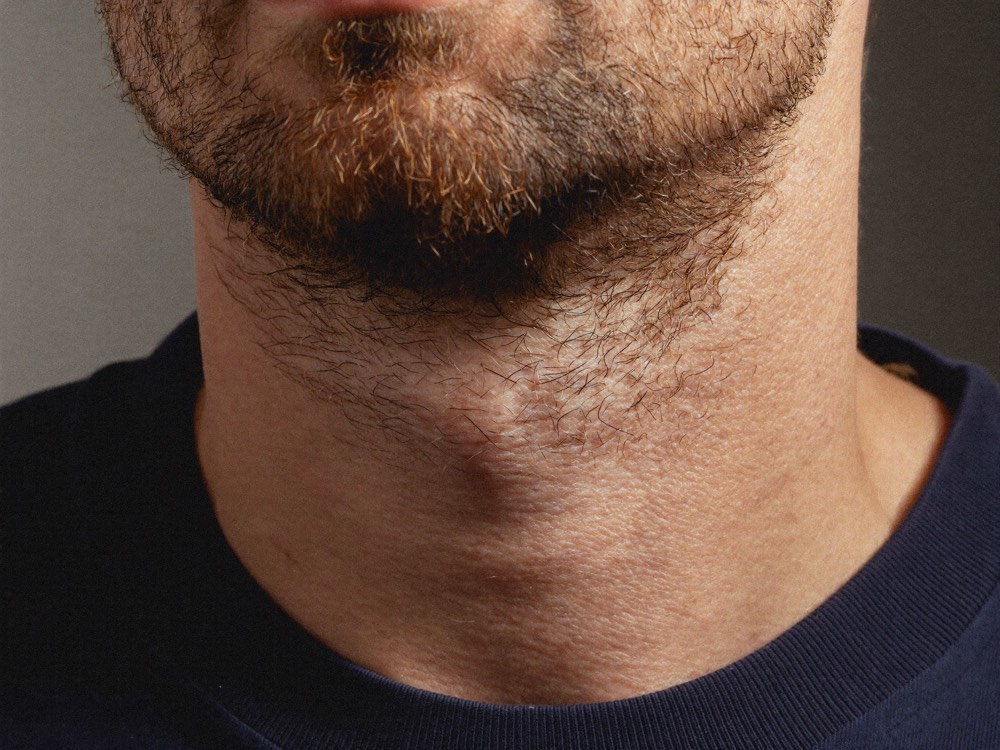
Facial hair restoration using the same extraction technique and planning.

Finasteride and minoxidil protocols to hold what you still have. Often the right first step.
Drag the handle. Every case is ours, shot at the same angle and lighting at twelve months, published with written consent.
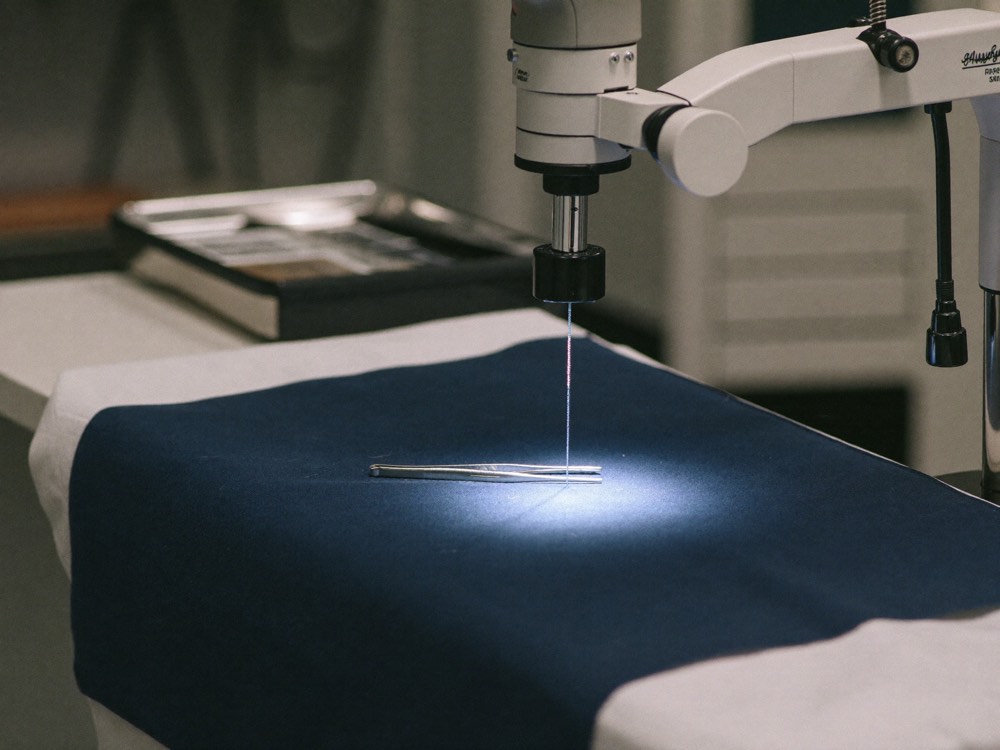
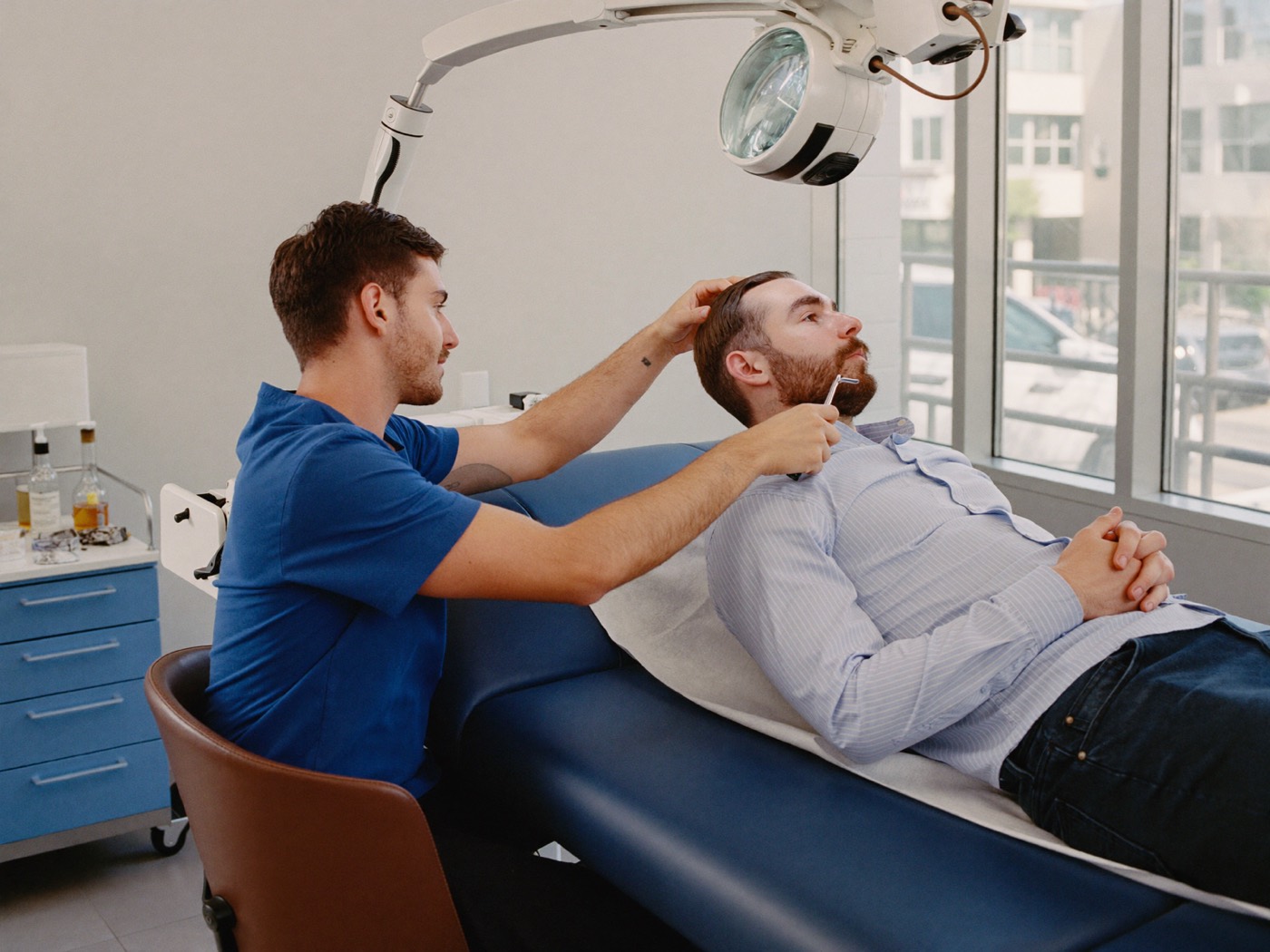
Every extraction is performed by the surgeon under magnification. Punch angle and depth decide graft survival, and that is not a step we delegate.
A donor assessment, a graft count and a fixed price, before you commit to anything.

Scalp analysis under magnification, a donor assessment, a graft count and a fixed price. In person or by video.
One session, eight to ten hours, local anesthetic. You watch films, eat lunch and go home the same evening.
Checks at three, six and twelve months. Final result is judged at twelve, not before.
Clinics that quote a flat package before seeing your donor area are deciding your graft count around a price rather than around your hair.
We measure your donor density under magnification first, then give you a graft count and a fixed price you can take away with you.
I was quoted a flat package in Turkey for a third of the price. He explained what over-harvesting would do to my donor at 45 and I stayed home.
The hairline he drew was lower than I wanted. He explained exactly why and I'm glad I listened, it looks like it grew there.
Back at work on the Wednesday. Nobody at the office worked out what I'd had done.
It depends on donor density, not how much you have lost. Advanced loss with a strong donor is very workable. Early loss with a thin donor sometimes is not. The consult measures it under magnification and gives you a straight answer.
It is priced per graft, and your graft count depends on your donor density, which cannot be assessed without seeing you. At the free consultation we measure it under magnification and give you a count and a fixed price to take away.
The procedure is under local anesthetic and most patients describe pressure rather than pain. Expect redness for five to seven days. Most people return to work within a week, sooner with the no-shave option.
Transplanted hair sheds at two to four weeks, which alarms everybody and is completely normal. New growth starts at three to four months. The result is judged at twelve months.
Possibly, because your natural hair keeps thinning even though transplanted hair does not. That is exactly why we hold donor grafts in reserve rather than using everything in one session.
Free consultation, in person or by video. You leave with a donor assessment, a graft count and a fixed price.